
The 8 Best Medical-Grade Moisturizers in Canada, Ranked (2026 Clinical Guide)
Moisturizer is the category everyone thinks they understand — which is why so many routines fail here. People spend $190 on a corrector, then seal it with a drugstore cream that fights their retinol, greases their sunscreen, or does nothing for the barrier their actives are quietly taxing. A moisturizer's real job isn't comfort; it's infrastructure. The right one rebuilds the lipid wall that decides how your skin looks, how it ages, and how much active-strength skincare it can actually tolerate.
This countdown ranks the eight medical-grade moisturizers we'd stake the shelf on, across five professional houses we stock as a Preferred Authorized Canadian Retailer: SkinCeuticals, iS Clinical, AlumierMD, ZO Skin Health and Vivier — covering barrier repair, sensitive skin, retinol support, day, night and the best-value everyday cream. We count down from #8; the crown sits at the bottom.
The podium, if you're in a hurry
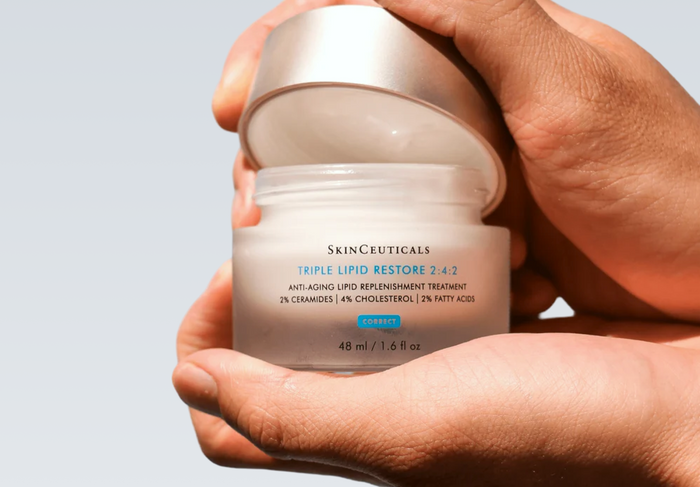
SkinCeuticals Triple Lipid Restore 2:4:2
The barrier-repair benchmark — patented lipid ratio, visible anti-aging results. $195
iS Clinical Reparative Moisture Emulsion
Overnight repair with genuine anti-aging actives. $151
How we ranked them
Four filters. Barrier science — does the formula actually rebuild lipids and hold water in, or just feel nice for an hour. Compatibility — a great moisturizer has to play cleanly under sunscreen and alongside retinoids and acids, because that's where modern routines live. Skin-type honesty — each pick has to be the best answer for someone specific, not a compromise for everyone. And reorder rate — moisturizer is a twice-daily habit, so repurchase data is brutally honest here. First purchases measure marketing; repurchases measure results.
The countdown: #8 to #1


The full ranking at a glance
| # | Moisturizer | Wins for | Texture | Price |
|---|---|---|---|---|
| 1 | SkinCeuticals Triple Lipid Restore | Best overall · barrier | Rich cream | $195.00 |
| 2 | iS Clinical Reparative Emulsion | Best night cream | Emulsion | $151.00 |
| 3 | Alumier HydraCalm | Sensitive & redness | Soothing cream | $90.50 |
| 4 | Alumier HydraDew | Best value · daily | Daily cream | $88.50 |
| 5 | ZO Renewal Crème | Retinol support | Restorative crème | $160.00 |
| 6 | Vivier LEXXEL | Post-procedure | Gentle cream | $130.00 |
| 7 | SkinCeuticals Emollience | Classic dry-skin cream | Rich cream | $110.00 |
| 8 | Vivier Nightly Age-Defying | Treatment + moisture in one | Night cream | $130.00 |
Three mistakes that waste a good moisturizer
1. Buying for the season you're not in. The gel that felt perfect in July is why your face is tight in January. Canadian skin realistically needs a winter moisturizer and a summer one — or at minimum, a richer night cream from November through March.
2. Treating moisturizer as optional on oily skin. Dehydrated oily skin produces more oil to compensate, then breaks out in the mess. A light emulsion calms the whole cycle — pair it with the right cleanser and half of “oily skin” resolves on its own.
3. Running strong actives with no barrier budget. Retinoids and acids spend lipids; your moisturizer is how you pay them back. If your actives routine stings, the fix is usually a better moisturizer, not weaker actives.
Frequently asked questions
Do I need a moisturizer if my skin is oily?
Yes — oily skin can still have a compromised barrier, and skipping moisturizer often makes oil worse, because dehydrated skin compensates by producing more sebum. The fix is texture, not abstinence: a lightweight emulsion hydrates without adding grease. Oil and hydration are different things; oily skin usually lacks the second.
What do ceramides and lipids actually do in a moisturizer?
They're the mortar between your skin cells. The barrier is built from ceramides, cholesterol and fatty acids in a specific natural ratio; age, retinoids, acids and winter deplete them, which reads as tightness, dullness and fine lines. Formulas that replace these lipids in a researched ratio — the entire premise of Triple Lipid Restore — repair the wall itself rather than just sitting on top of it.
Gel, lotion, emulsion or cream — how do I choose?
Match richness to how much lipid your skin is missing. Oily and combination skin generally wants gels and light emulsions; normal skin sits comfortably in lotions; dry, mature and winter skin earns creams like Emollience. If makeup slides off by noon, go one step lighter; if skin feels tight an hour after applying, go one step richer.
When does moisturizer go on in a routine?
After your treatment serums, before sunscreen in the morning. The working order is thinnest to thickest: cleanse, actives, moisturizer, then SPF in the AM. At night, moisturizer is usually the final step — it seals your actives in and tops up the lipids they cost you.
Should I use a different moisturizer morning and night?
It's the easiest upgrade most routines are missing. Mornings want something lighter that plays well under SPF, like HydraDew; nights can carry a richer, reparative formula like the Reparative Moisture Emulsion — skin loses the most water overnight and does its repair work while you sleep. One moisturizer can serve both shifts, but a day/night split optimizes each.
Can my moisturizer replace an eye cream?
Often, yes — if it's fragrance-free and non-irritating, most well-formulated moisturizers are safe near the orbital bone and soften the look of fine lines. Dedicated eye formulas earn their place for specific concerns like persistent dark circles or puffiness that benefit from targeted actives.
Does moisturizer actually help with anti-aging?
More than most people credit. A meaningful share of what reads as fine lines is dehydration and lipid loss, which the right moisturizer visibly softens within weeks. Long-term, a healthy barrier lets you tolerate the proven anti-aging actives — retinoids, acids, vitamin C — consistently, and consistency is where results come from.
Should I switch moisturizers seasonally?
In Canada, realistically yes. Winter's cold air and indoor heating strip lipids aggressively — most skin needs a richer cream from November to March — while summer humidity lets you drop to a lighter emulsion. If your trusty moisturizer suddenly “stops working” in January, it didn't; the climate changed the assignment.
Are medical-grade moisturizers worth it over drugstore versions?
In this category the difference is precision: researched lipid ratios, clinically dosed actives, and formulas designed to pair with retinoids and acids rather than merely coat the skin. A drugstore cream can hydrate; a medical-grade one is engineered to rebuild the barrier and prove it in trials. Given moisturizer touches your face twice daily all year, the cost per use is small — the full case is on our Why WeDoSkin page.
Do you ship these moisturizers across Canada?
Yes. WeDoSkin.ca is a Preferred Authorized Canadian Retailer of every brand in this ranking — SkinCeuticals, iS Clinical, AlumierMD, ZO Skin Health and Vivier — with authentic, fresh stock shipped quickly nationwide, free over $65.
Why Canadians Choose WeDoSkin
Trusted by more than 100,000 customers, WeDoSkin.ca is a Preferred Authorized Retailer of medical-grade skincare in Canada — 45+ professional brands and 3,000+ products, with cashback rewards that never expire, 100-day returns, free Canada-wide shipping over $65, and free samples in every order.
Not sure which one is yours?
Barrier repair, sensitive skin, retinol support and everyday hydration each want a different cream. Our clinical team will match the right moisturizer to your skin — authentic product, expert guidance.
Book a free consultationReviewed under medical oversight
This guide is reviewed by Dr. J. Porter, Medical Reviewer at the WeDoSkin Clinic in Calgary. As a Preferred Authorized Retailer, our clinical team works with these brands every day. Educational information, not a substitute for personalized medical advice. Our medical-review standards →