



Ozempic Face: The Honest Skincare Guide for GLP-1 Users (Canada, 2026)
Ozempic face is a rapid-weight-loss effect, not a drug side effect — and what you do in the first six months decides how much of it you keep.
Here is the thing almost nobody writing about this will tell you: Ozempic face is not a side effect of Ozempic. Cleveland Clinic's endocrinologists say so directly — the same hollowing, the same slack jawline, the same suddenly-visible temples show up after bariatric surgery, after a crash diet, after any weight loss that outruns the tissue holding your face together. The drug did not do this to your skin. Speed did.
That distinction matters, because it changes what you can actually do about it. If a medication were dissolving your collagen, you would be stuck. If the problem is that your face lost its scaffolding faster than your skin could adapt, then the variables are on the table: how fast you lose, how much protein you eat, how much elastin you protect, and how well you look after the envelope that has to shrink around a smaller face. This is the honest version — what the 2026 evidence really shows, what skincare can genuinely do, what it absolutely cannot, and the routine we build for the roughly three million Canadian adults now on a GLP-1.
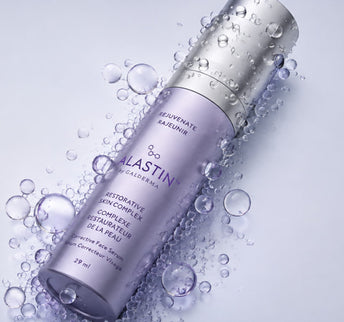
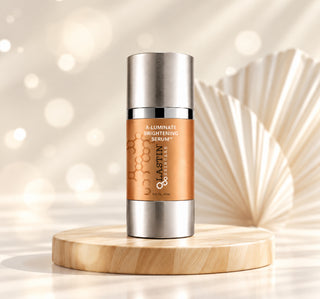
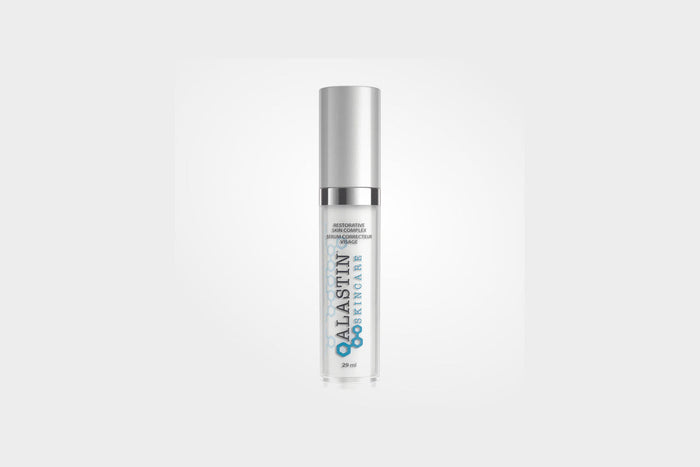
Ozempic face is facial hollowing and sagging caused by rapid weight loss, not by the drug itself. No cream replaces lost volume — that is a clinic job. What skincare does is protect the skin envelope you keep: daily SPF to defend elastin you cannot regrow, a peptide or growth-factor serum like Alastin Restorative Skin Complex ($298 CAD) to support the collagen and elastin matrix, a retinoid, and serious barrier repair. Start it in the first six months, not after.
What Is Actually Happening To Your Face
Your face is not one even layer of padding. It is a stack of discrete fat compartments, and they do two different jobs. The deep compartments — deep medial cheek fat, the pad under the eye muscle, the buccal and temporal fat — are structural. They are the shelf. The superficial compartments sitting above them are contour: they give you the soft, continuous surface a face is supposed to have.
Deflate the shelf and the contour has nowhere to sit. The superficial cheek pad slides down and inward, and it piles up at the nasolabial fold and along the jaw. This is why the fold looks deeper and a jowl appears even though the skin over them did not change at all. It is also why filling a nasolabial fold directly so often looks wrong — the fold is a symptom, and the deficit is two centimetres north and several millimetres deep.
Why the skin does not just shrink back
Because elastin is a one-time gift. Your mature elastic fibres are laid down largely in childhood and adolescence, and adult skin does not meaningfully replace them. Collagen is the opposite — it remodels continuously, which is exactly why retinoids, vitamin C and in-clinic collagen stimulation do something measurable and why "firming" creams do not.
The best hard data we have comes from post-bariatric skin biopsies, the closest available analogue. In an 80-biopsy 2024 study, collagen fell to roughly 49% of normal fraction in everyone who lost massive weight, regardless of method. But elastic fibre content was significantly lower in the faster-losing surgical group — 5.0% versus 6.8%. Same weight lost. Different speed. Worse elastin. That single finding is the entire argument for slowing down.
The scientific argument nobody else is showing you
There are two live positions in the literature, and the pages currently ranking for this topic present neither. In 2024, a team writing in the Aesthetic Surgery Journal argued that GLP-1 receptor agonists may act on skin directly — inhibiting adipose-derived stem cells, depleting the fat layer inside the dermis itself, and indirectly lowering the local estrogen that dermal fat helps produce, which would explain why peri- and postmenopausal women are hit hardest. In April 2026, a review in the Journal of Clinical Medicine pushed back: yes, GLP-1 receptors exist in skin, but almost all of that evidence is in vitro or in animals, and the facial change tracks rapid volume loss, not dermal toxicity. That review even found signals the drugs might be protective for skin in other ways.
The defensible read as of 2026: Ozempic face is a rapid-weight-loss phenomenon that GLP-1s cause because they make rapid weight loss easy — with a genuinely open question about whether the drugs also act on the fat and stem cells inside your skin. Anyone stating this more confidently in either direction is selling you something.
Who Gets It, And When
A 40-study review published in 2026 named the risk factors plainly: advanced age, a long history of obesity, rapid weight loss, poor hydration, and insufficient protein intake. Three of those five are things you control this week. Age is the multiplier — an older face starts with less subcutaneous reserve and less capacity to adapt, and the 2025 American Society of Plastic Surgeons report found its largest age-group growth in patients 66 and older.
| Timeline | What is happening | What to do about it |
|---|---|---|
| Month 0–1 | Nothing visible yet. This is the prevention window. | Start SPF, barrier repair and protein now — before you need them |
| Month 1.5–3 | Diffuse hair shedding often begins; skin turns dry and dull | Barrier + scalp support; step retinoid down, do not stop |
| Month 3–6 | Facial volume change becomes visible; neck and jawline soften | Peptide/growth-factor serum, neck treatment, clinic consult |
| Month 6–12 | Shedding reverses once weight stabilises; laxity settles into its new shape | Collagen work: retinoid, vitamin C, energy devices, volume replacement |
The Half Of This Nobody Merchandises: Hair, Neck and Body
Ask a GLP-1 patient what actually upset them and a lot of the time it is not the cheeks. It is the hair in the shower drain.
The data here is the strongest in the whole subject. A 2026 systematic review put hair loss at 6.0 per 1,000 patient-years on GLP-1s versus 0.8 on placebo — about three times the risk. A real-world study of 547,993 matched adults found telogen effluvium roughly 1.76 times more likely at twelve months. Clinical trial rates run 3–7%; a real-world patient survey found 70% reporting some shedding, with women more than three times as likely. The reassuring part, and please read this twice: it is telogen effluvium, not scarring alopecia. There is no permanent follicular damage. It starts one and a half to three months in, and it typically reverses within three to six months of your weight stabilising. If it persists past nine months, or if it is patterned rather than diffuse, see a dermatologist — that is a different problem wearing the same costume.
Then there is everything below the jaw. Clinicians describe temporal hollowing, platysmal banding, earlobe thinning, crepey décolletage and arms, and loose skin causing friction rashes in the folds. The ASPS recorded neck lifts up 21% and facial fat grafting up 39% in a single year. Almost nobody writes about the neck and décolleté or the body in this context, which is exactly why they are the areas people are most upset about and least prepared for. Treat them from day one.
What Skincare Can Do — And What It Genuinely Cannot
Let us get the disappointing part out of the way, because you deserve it straight. The American Academy of Dermatology's position on firming creams is that "a cream or lotion cannot penetrate the skin deeply enough" to lift sagging skin, and that if you want facelift-like results from a jar, "you'll likely be disappointed." Dermatologists interviewed in 2026 put it even more bluntly: no topical product prevents loose skin from major volume loss.
That is true, and it is also not the whole story. Volume is one problem. Skin quality is a separate problem, and it is the one that is actually yours to win. Thickness, hydration, barrier integrity, tone, fine lines, texture, radiance — every one of those degrades during rapid weight loss, every one responds to topicals, and every one of them is what people are really seeing when they say a face looks tired. Here is the honest evidence ranking.
| Evidence tier | What it is | What it honestly does |
|---|---|---|
| Strong | Broad-spectrum SPF 30+ | UV is the main modifiable destroyer of elastin. Protects what you cannot regrow. Non-negotiable. |
| Strong | Retinoids | Genuine collagen induction, proven at histology level since 1993. Months, not weeks. Ease off if skin turns dry. |
| Strong | Ceramides & barrier lipids | Directly fixes the most common and most treatable GLP-1 complaint: dryness. Best satisfaction per dollar here. |
| Strong | Vitamin C | Obligate cofactor for collagen crosslinking. Supports synthesis and photoprotection. Not a firming agent. |
| Supportive | Peptides & growth factors | Mechanistically the most on-theme class. Real clinical trials, often manufacturer-run. Supportive, not miraculous. |
| Insufficient | Topical PDRN, topical exosomes, DMAE | Injectable PDRN has a real base; topical does not. "Instant firming" is a transient cosmetic effect, not collagen. |
A note Canadians should have and almost nobody publishes: in April 2026 Health Canada issued a final notice on topical exosome and cell-conditioned-media products, ruling they are not inherently drugs — but that a product becomes a drug the moment it makes therapeutic claims, shows systemic absorption, or is represented for use with microneedling or injection. If you are buying topical exosomes in Canada, that is the line the claims on the box have to stay behind. We cover the category honestly in our PDRN and polynucleotides guide.
The #1 Pick: Alastin Restorative Skin Complex
The One Serum Built For This Exact Problem
Why it wins: The core of Ozempic face is a matrix problem — fragmented elastin and collagen sitting in a scaffold that just lost its support. TriHex Technology® is the only major platform designed around precisely that sequence: help clear the damaged structural protein, then support the skin's production of fresh elastin and collagen. Hexapeptide-38 addresses the appearance of volume; the whole formula was built in and for aesthetic clinics.
Best for: Anyone on a GLP-1 who wants one serious serum rather than five average ones — ideally started while the weight is still coming off. Read the full breakdown in our Restorative Skin Complex review, or the wider Alastin guide.
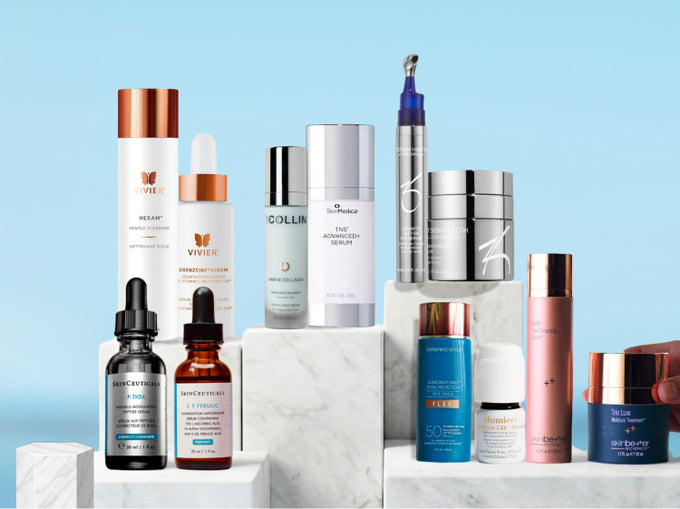
The GLP-1 Power 8: What To Actually Buy
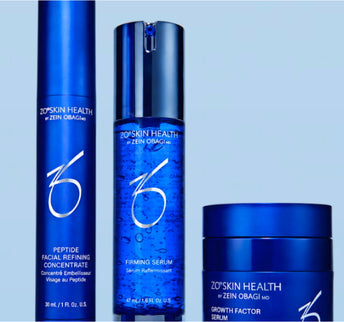
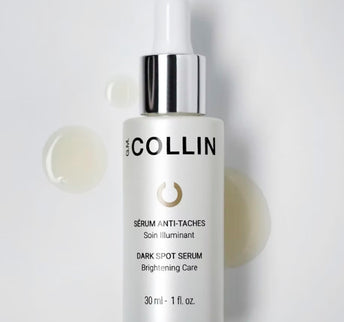
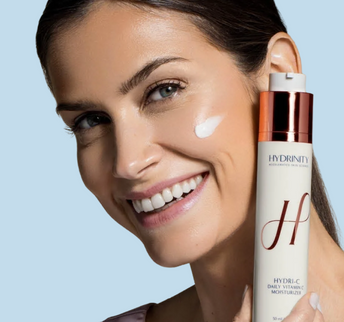
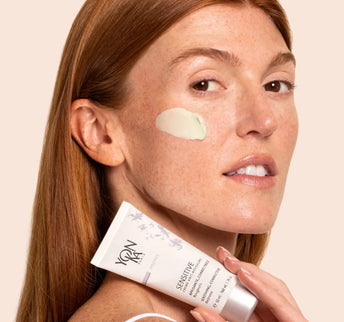
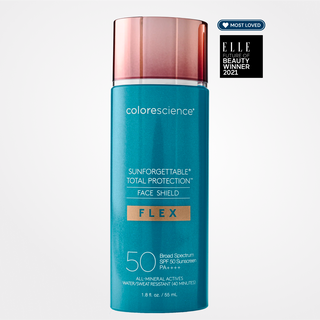
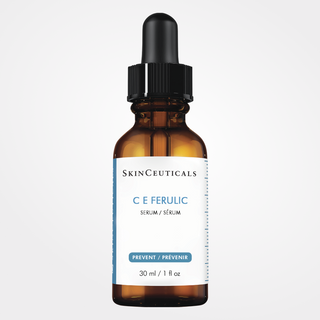
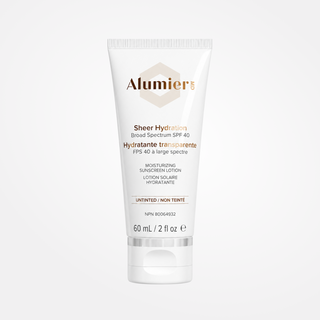
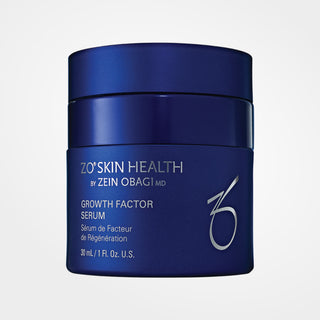
Eight products, chosen against the mechanisms above rather than against a marketing calendar — with live Canadian pricing.


Browse the wider regenerative skincare, peptide and anti-aging collections — and if lean mass and micronutrients are the piece you have been ignoring, our skin supplements review covers the supplement side properly.
Skincare vs The Clinic: The Honest Division Of Labour
| Daily skincare | In-clinic treatment | |
|---|---|---|
| Replaces lost volume | No — and nothing claiming otherwise is honest | Yes — HA filler, Sculptra, Radiesse, fat transfer |
| Lifts sagging skin | No | Yes — ultrasound, RF microneedling, surgery |
| Protects elastin you still have | Yes — this is entirely yours | No |
| Supports collagen | Yes — retinoids, vitamin C, peptides | Yes, faster — biostimulators, energy devices |
| Fixes dryness, dullness, texture | Yes — and almost immediately | Partly |
| Cost & commitment | Daily, low, reversible | Episodic, high, semi-permanent |
The verdict: these are not competitors, they are two halves of one plan — and the sequencing matters more than the choice. Canadian dermatologists are increasingly arguing for proactive collagen support during the weight-loss journey rather than reactive repair after it, because the tissue you protect on the way down is tissue nobody has to rebuild later. Skincare is the only part of that you can start today, for the price of one filler syringe, and it is the part that makes everything a clinic does afterwards last longer.
On a GLP-1? You Should Be On This Routine
Month 0–3 · Just Started
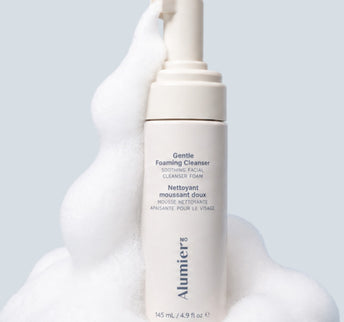
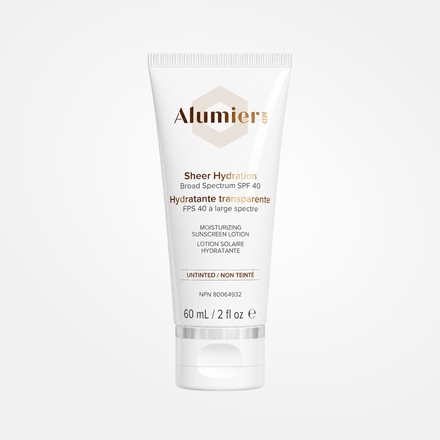
- ☀️ AM: Gentle cleanse > Restorative Skin Complex > HydraRich > Sheer Hydration SPF 40
- 🌙 PM: Cleanse > Restorative Skin Complex > Renewal Retinol 0.25 (2–3× weekly) > HydraRich
- 🍳 Non-negotiable: 80–120g protein daily, resistance training, 1–2 lb/week target
Month 3–6 · The Shedding Window
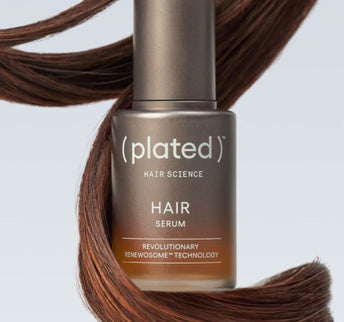
- 💧 Add: Revive7 Revitalizing Hair Treatment nightly to the scalp
- 🧴 Adjust: retinoid down to 1–2× weekly if skin has turned dry — reduce, don't quit
- 🩺 Ask your prescriber: ferritin, iron, vitamin D, zinc. Skip biotin supplements — they interfere with thyroid and troponin lab assays
Month 6+ · Rebuild & Hold
- ☀️ AM: TNS Advanced+ > vitamin C > moisturiser > SPF 40
- 🌙 PM: Restorative Skin Complex > retinoid back to nightly > Ultra Nourishing Moisturizer
- 🏥 Now consider: a consult for collagen stimulation or volume replacement — skincare has done its part
The Neck & Body Protocol
- ☀️ AM: Restorative Neck Complex up to the jawline > SPF on neck and chest, every day
- 🌙 PM: Neck Complex > TransFORM Body Complex on arms, décolleté and abdomen
- 🚿 Rule: moisturise the whole body while skin is still damp — this is AAD advice, not a spa flourish
Five Mistakes That Cost People Their Face
1. Chasing the fastest possible loss. Speed is the single variable most strongly tied to worse elastin and worse shedding, and it is the one people optimise hardest for. One to two pounds a week is not timidity — it is the only intervention with real evidence for preventing the facial change.
2. Under-eating protein. Somewhere between 20% and 50% of GLP-1 weight loss can come from lean tissue, and facial muscle is lean tissue. Aim for 80–120g of protein a day, or roughly 0.8–1.6g per kilogram, and lift something heavy twice a week. No serum compensates for a face that lost its muscle.
3. Waiting until it looks bad to start. The prevention window is the first six months, while there is still elastin to protect and collagen to support. Starting a peptide serum after the volume has gone is asking a good product to do a job it was never able to do.
4. Quitting the retinoid because skin got dry. Dryness on a GLP-1 is a barrier problem, not a retinoid problem. Drop the frequency, add ceramides, keep the collagen signal. Stopping entirely gives up the one ingredient with histology-level proof.
5. Caring for the face and ignoring the neck. The neck, chest and arms show it first, respond slower, and are the areas patients report being most distressed by. If you are going to be disciplined about one extra step, make it the neck.
Frequently Asked Questions
What is Ozempic face?
Ozempic face is the hollowed, sagging, prematurely aged look that can follow rapid weight loss on a GLP-1 medication such as Ozempic, Wegovy, Mounjaro or Zepbound. It is not a direct side effect of the drug. Cleveland Clinic is explicit that the same changes occur after bariatric surgery or any very fast weight loss — the face loses the subcutaneous fat that was holding it up, and the skin envelope does not shrink at the same speed.
Is Ozempic face permanent, and will it reverse if I stop?
Facial fat can return if you regain weight, but the skin quality changes are the part that tends to stay. Rapid weight loss degrades elastic fibres, and mature elastin is laid down largely in childhood and adolescence and is not meaningfully replaced in adult skin. Collagen is different — it remodels continuously and does respond to retinoids, sunscreen and in-clinic collagen stimulation. So the honest answer is that volume is recoverable or replaceable, and elasticity mostly is not.
Can skincare fix Ozempic face?
No cream restores lost facial volume, and the American Academy of Dermatology says plainly that a cream or lotion cannot penetrate deeply enough to lift sagging skin. What good skincare does is protect the envelope you keep: it defends the elastin you still have with daily SPF, supports collagen with retinoids and vitamin C, repairs the barrier, and keeps skin thicker, smoother and better hydrated. It also makes you a better candidate for, and extends the results of, in-clinic volume work.
Does Ozempic cause hair loss?
Yes, at a measurably higher rate. A 2026 systematic review found hair loss at 6.0 per 1,000 patient-years on GLP-1 receptor agonists versus 0.8 on placebo, and a real-world study of nearly 548,000 matched adults found telogen effluvium roughly 1.76 times more likely at twelve months. The trigger is thought to be rapid weight loss and caloric restriction rather than the drug itself. It typically starts one and a half to three months in and reverses within three to six months of weight stabilising.
How do I prevent Ozempic face?
Slow the loss to roughly one to two pounds per week, eat 80 to 120 grams of protein a day (or 0.8 to 1.6 grams per kilogram), do resistance training to protect lean mass, wear broad-spectrum SPF 30 or higher every day, use a retinoid and a barrier-repair moisturiser, and stay hydrated. Slower weight loss is the only intervention with real evidence for preventing the facial change.
What skincare should I use while on a GLP-1?
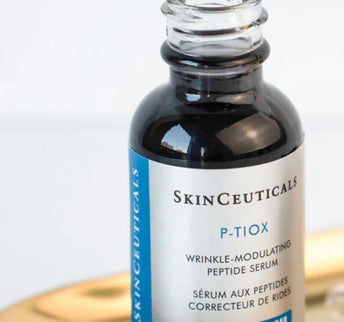
Daily broad-spectrum SPF 30+, a barrier-repair moisturiser with ceramides applied to face and body while skin is still damp, a retinoid for collagen (stepped down in frequency if your skin has turned dry), vitamin C, and a peptide or growth-factor serum such as Alastin Restorative Skin Complex or SkinMedica TNS Advanced+. Add neck and body treatment early, because those areas show it first.
Do fillers or Sculptra work better than skincare for Ozempic face?
They do a different job. Volume has to be replaced, not creamed back, so hyaluronic acid filler placed deep, poly-L-lactic acid, calcium hydroxylapatite or fat transfer are what restore contour. Energy devices such as microfocused ultrasound and radiofrequency microneedling address laxity. Skincare is the daily layer underneath all of it — and Canadian dermatologists increasingly favour starting that layer during the weight loss rather than repairing afterwards.
Does Ozempic face affect the neck and body too?
Yes, and it is the most under-covered part of the problem. Clinicians describe temporal hollowing, platysmal banding in the neck, earlobe thinning, crepey décolletage and arms, and loose skin that can cause friction rashes. The 2025 American Society of Plastic Surgeons report recorded a 21% rise in neck lifts and a 39% rise in facial fat grafting. Treat the neck and body from day one, not after the face.
The Evidence Behind This Guide
This is a health topic, so here is where every claim above comes from. Cleveland Clinic, "Ozempic Face": What It Is and How to Avoid It (2025) · American Academy of Dermatology, How can GLP-1 drugs affect my skin, hair, and nails? and Many ways to firm sagging skin · Ridha et al., Aesthetic Surgery Journal 2024;44(11):NP809 · Žaliukaitė & Lebbar, J Clin Med 2026;15(8):2944 · Barone et al., Aesthetic Plast Surg 2026;50(13):5403 · Hany et al., Obes Surg 2024;34(3):855 · Gupta et al., Science Progress 2026;109(2) · Vidal et al., JAAD International 2026;25:133 · Spreckley et al., Int J Obes 2026;50:265 · Griffiths et al., NEJM 1993;329:530 · Health Canada final notice on topical exosomes (April 2026) · Canadian Public Health Association (2026) · American Society of Plastic Surgeons, 2025 Plastic Surgery Statistics Report.
This guide is educational and is not medical advice. Never change or stop a prescribed GLP-1 medication because of how your skin or hair looks — talk to the clinician who prescribed it.
Keep Reading
Our #1 Recommendation
Alastin Restorative Skin Complex
The Intel: TriHex Technology® is the one platform built around clearing fragmented elastin and collagen and supporting the rebuild — the exact matrix problem underneath Ozempic face. Start it while the weight is still coming off. Shipped fresh and authorized from WeDoSkin.
WHY SOURCE FROM WEDOSKIN?
Authorized RetailerFully authorized clinical partner for all 40+ brands. Fresh, active product guaranteed. | 45-Day GuaranteeProtected orders are covered by a 45-day window for total peace of mind on your investment. | Free ShippingBuild your clinical routine without shipping fees. Free delivery on Canadian orders over $65. |
Clinical DeliveryClimate-conscious logistics help preserve the integrity of active, temperature-sensitive formulas. | 5-Star ReputationThousands of patients trust our clinical team for their medical-grade shopping and guidance. | Expert GuidanceOn a GLP-1 and not sure where to start? Get complimentary support from our expert aesthetic team. |
Questions About Products?
Connect directly with a WeDoSkin clinical expert for a complimentary consultation. We'll help you build a routine that fits where you are in your GLP-1 journey — and tell you honestly when the answer is a clinic, not a cream.
Contact Our Skincare ExpertsReviewed under medical oversight
This guide is reviewed by Dr. J. Porter, Medical Reviewer at the WeDoSkin Clinic in Calgary. As a Preferred Authorized Retailer, our clinical team works with these brands every day. Educational information, not a substitute for personalized medical advice. Our medical-review standards →
