



Why Your Dark Spots Keep Coming Back
Pigment is suppressed, never removed. Why last year's progress disappears every autumn, and the sixteen-week plan that holds it down.
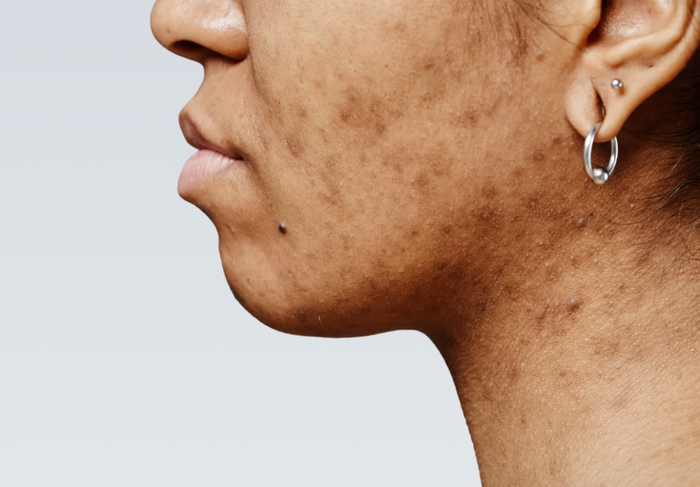
Every October we have the same conversation. Someone cleared their pigment beautifully by May, stopped the routine over the summer because their skin looked fine, and now the spots are back — in exactly the same places, in the same shapes, as if nothing had ever happened.
This is not a product failure. It is what pigment does. And the reason it feels like a betrayal is that almost nobody is told the actual mechanism at the point of sale: brightening serums do not remove pigment, they suppress its production. Suppression lasts precisely as long as you keep suppressing.
Below is the honest version — why autumn is when it reappears, the three-part routine that actually holds ground, and the eight products worth owning. Fair warning: the most important one on the list is a sunscreen.
Melanocytes do not reset. Keep a brightener like EvenTone running year-round rather than seasonally, add retinol underneath to clear pigment already present, and treat daily tinted SPF 40 as the treatment rather than the accessory. Judge it at sixteen weeks, from a photograph.
Suppressed, Never Removed
What a brightener is actually doing
Once a patch of skin has learned to over-produce melanin in response to UV, heat or visible redness, it keeps that setting indefinitely. Tyrosinase inhibitors — the active class in essentially every brightening serum on the market — reduce the rate of production. They do not remove the capacity to produce. Nothing available over a counter does.
Which makes it a maintenance product
So a brightening routine works exactly as long as you keep running it, in the same way a blood pressure medication does. Three months on and three months off is not a maintenance strategy. It is three months of ground gained followed by three months of ground handed back.
Why nobody tells you this
Because “use this forever” is a worse sales line than “fades dark spots in eight weeks”. Both statements are true. Only one of them prepares you for October.
Why Autumn Is When It Shows Up
There is a lag. Melanin produced under summer UV takes roughly six to eight weeks to migrate up through the epidermis and become visible at the surface. The pigment appearing on your face in September and October was largely manufactured in July.
Two consequences follow. First, by the time you see it, the causal event is long finished — there is nothing to prevent, only something to treat. Second, the routine you stopped in June is precisely why nothing was holding it down while it surfaced. The timing feels like bad luck. It is arithmetic.
The Three-Part Routine That Actually Holds
1. A brightener, continuously
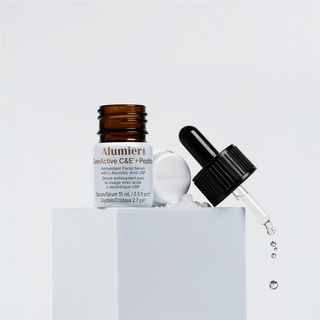
Kojic acid, niacinamide, licorice root, tranexamic acid, arbutin — the specific inhibitor matters far less than the fact that something is present every single day, all year. Choose the one you will genuinely keep using, which for most people means the one that does not sting.
2. A retinoid underneath it
Brighteners stop new pigment forming; a retinoid helps visibly clear the pigmented cells already sitting in the epidermis by accelerating turnover. Running one without the other is the most common reason a pigment routine plateaus at “a bit better” and stays there for a year.
3. SPF, which is the actual treatment
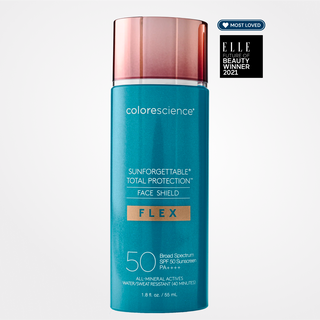
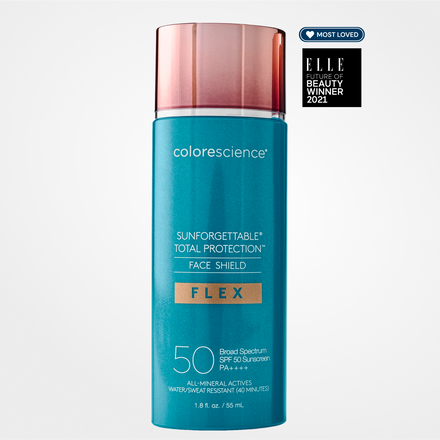
Every clinical study demonstrating a result in hyperpigmentation has daily sunscreen in both arms. It is not the supporting act. Without it the other two are fighting a source that never switches off. And for stubborn dark spots specifically, the tint matters — iron oxides block visible light, which drives stubborn dark spots independently of UV, so an untinted sunscreen leaves a mechanism completely unaddressed.
AlumierMD EvenTone Is the One to Run Year-Round
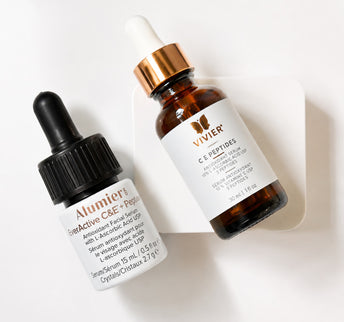
It is built for continuous use, which is the only kind of use that works. Multiple brightening pathways without hydroquinone means no cycling on and off, no rebound, and no eight-week clock. Tolerable enough to sit under a retinoid on alternate nights and mild enough to keep through a Canadian winter without your barrier objecting. Unglamorous, and precisely right.
Pigment not moving after four months? Step to Intellibright Complex. Tighter budget? ZO Brightalive at $118.00.
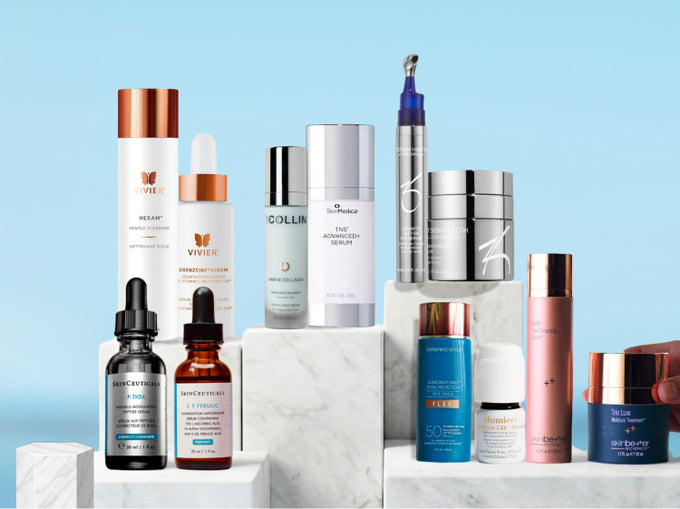
The Pigment Shelf: Eight Worth Owning
Ranked by how often we actually recommend each one. Most people need three of these: a brightener, a retinoid and a tinted SPF.


EvenTone vs Brightalive vs Intellibright
The three brighteners people ask us to compare. There is no universal winner, only a right answer for how stubborn your pigment has proved to be.
| AlumierMD EvenTone | ZO Brightalive | AlumierMD Intellibright | |
|---|---|---|---|
| Price | $140.00 | $118.00 (30ml) | $136.00 |
| Best for | Year-round maintenance | A first brightener | Stubborn, established pigment |
| Hydroquinone | No | No | No |
| Assertiveness | Gentle — the safe default | Gentle | Moderate |
| Pairs with retinol | Yes, alternate nights | Yes, alternate nights | With care |
| Time to visible change | 12–16 weeks | 12–16 weeks | 16 weeks |
| Continuous use | Designed for it | Yes | Yes, monitor tolerance |
The verdict: EvenTone for most people and for the long haul. Brightalive if this is your first brightener or the budget is tight. Intellibright when a gentler option has genuinely been given sixteen weeks and the pigment has not moved. Buying two at once is the classic mistake — you learn nothing about which one worked.
Four Pigment Routines
Find the one that describes your pigment. They are not interchangeable, because the causes are not.
First pigment routine
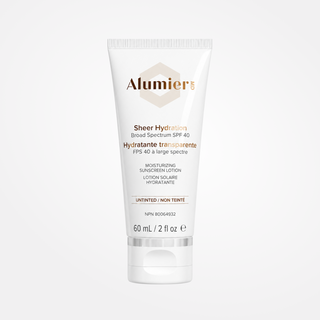
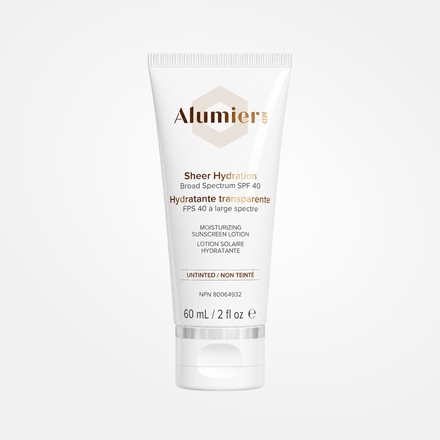
- ☀️ AM: cleanse > EvenTone > Sheer Hydration SPF 40 Tint
- 🌙 PM: cleanse > EvenTone > moisturiser
- 📅 Week 5: add Retinol 0.5% twice weekly, not before
Stubborn dark spots
- ☀️ AM: cleanse > EvenTone > tinted SPF 40, reapplied at midday
- 🌙 PM: cleanse > Mela-Even Cream
- 🌡️ Also: heat is a trigger independent of light — saunas, hot yoga, long hot showers all count
Post-post-blemish marks
- ⛔ Stop picking. Every trauma creates new pigment; this is the whole treatment.
- ☀️ AM: cleanse > Brightalive > SPF 40
- 🌙 PM: cleanse > Retinol 0.5% > moisturiser, three nights weekly
Winter maintenance
- ✅ Do not stop. This is the routine that decides next October.
- ☀️ AM: EvenTone > SPF 40, every day including cloudy ones
- 🌙 PM: retinoid three nights, brightener on the other nights
Five Things That Make Pigment Worse
1. Aggressive exfoliation
Visible redness drives melanin production. Scrubbing a dark spot reliably darkens it, which is a genuinely cruel piece of biology and the most common self-inflicted setback we see.
2. Picking at blemishes
Post-inflammatory hyperpigmentation is pigment manufactured by trauma. It is the one category of dark spot that is almost entirely preventable, and prevention is free.
3. Caring for heat as irrelevant
Stubborn dark spots responds to heat as well as to light. Saunas, hot yoga, steam and long hot showers all contribute, and no serum compensates for a daily heat trigger.
4. Untinted sunscreen for stubborn dark spots
Visible light drives stubborn dark spots independently of UV. A clear sunscreen leaves that pathway wide open. The iron oxides in a tinted formula are the mechanism, not the marketing.
5. Stopping in November
The single most common reason last year’s progress is not this year’s starting point. Winter is when maintenance is cheapest and most effective, because the source pressure is at its lowest.
Give It Sixteen Weeks and a Photograph
Pigment responds more slowly than texture or fine lines. Four weeks tells you nothing at all; twelve weeks tells you the direction; sixteen weeks tells you whether it is working. Photograph the area in consistent daylight, without makeup, before you start — because judging pigment in a mirror you look into every morning is the fastest route to abandoning something that was quietly succeeding.
Frequently Asked Questions
Why do my dark spots come back every year?
Brightening agents suppress melanin production rather than removing the ability to produce it. When the routine stops, production resumes. Pigment made under summer UV also takes six to eight weeks to surface, which is why it reappears in autumn.
How long does it take to fade hyperpigmentation?
Sixteen weeks is a fair assessment window. Pigment responds more slowly than texture. Photograph the area in daylight at the start so you have an objective comparison rather than a memory.
Should I use a brightening serum in winter?
Yes. Winter is when maintenance matters most and works best. Stopping over the colder months is the most common reason the previous year's progress disappears.
Does retinol help with dark spots?
It helps visibly clear pigment already present by accelerating cell turnover, but it does not prevent new pigment forming. Pair it with a tyrosinase-inhibiting brightener and daily SPF for a complete approach.
Is tinted sunscreen better for stubborn dark spots?
Yes. Iron oxides in tinted formulas block visible light, which drives stubborn dark spots independently of UV. An untinted sunscreen leaves that pathway unaddressed.
Where can I buy authentic AlumierMD EvenTone in Canada?
WeDoSkin is an authorized Canadian AlumierMD retailer. EvenTone is $140.00 and Intellibright Complex $136.00, shipped fresh across Canada.
Keep Reading
Our #1 Recommendation
AlumierMD EvenTone
The Intel: Multi-pathway brightening without hydroquinone, formulated for the continuous year-round use that pigment actually requires. Gentle enough to sit alongside a retinoid. Authorized, fresh AlumierMD stock, shipped across Canada.
WHY SOURCE FROM WEDOSKIN?
Authorized RetailerFully authorized clinical partner for all 40+ brands. Fresh, active product guaranteed. | 45-Day GuaranteeProtected orders are covered by a 45-day window for total peace of mind on your investment. | Free ShippingBuild your clinical routine without shipping fees. Free delivery on Canadian orders over $65. |
Clinical DeliveryClimate-conscious logistics help preserve the integrity of active, temperature-sensitive formulas. | 5-Star ReputationThousands of patients trust our clinical team for their medical-grade shopping and guidance. | Expert GuidanceNot sure where to start? Get a routine mapped by our expert aesthetic team, free. |
Questions About Products?
Connect directly with a WeDoSkin clinical expert for a complimentary consultation. Tell us your skin type and what you are using now — we will map the exact routine and the order to use it in.
Contact Our Skincare ExpertsReviewed under medical oversight
This guide is reviewed by Dr. J. Porter, Medical Reviewer at the WeDoSkin Clinic in Calgary. As a Preferred Authorized Retailer, our clinical team works with these brands every day. Educational information, not a substitute for personalized medical advice. Our medical-review standards →
