



How to Restart Retinol Without the Peeling
How to restart a retinol after you have already quit once — the four-week ramp, and the step to drop instead.
There is a bottle of retinol in your bathroom you are not using. We know this because there is one in most bathrooms. It was abandoned somewhere around week six, and the reason is almost never the reason people give.
People say it was too harsh. Usually it was not. Week one to four is genuinely uncomfortable — that part is real. But by week six the flaking has stopped, the stinging has settled, and nothing dramatic has happened yet. There is no reward on offer, so the bottle moves to the back of the drawer. That is the actual failure point: not the irritation, the boredom.
Which is a shame, because week six is roughly where the interesting part begins. Here is the honest version of restarting, including the strength you should buy, the step you should remove instead of the retinol, and the one technique that keeps people in the routine long enough to see anything.
If your retinol is sitting unused you do not need a stronger one. Restart at 0.25%, two nights a week, and hold there for three full weeks before adding a third night. If your skin gets angry, remove the exfoliating acid — not the retinol. Buffer with moisturiser underneath. Judge the result at twelve weeks, not four.
Why Week Six Is Where Everyone Quits
Retinoids run on two clocks
The surface effects — flaking, sensitivity, that odd papery roughness — arrive in weeks one to four and then fade. The effects you actually bought the product for — smoother texture, softened lines, more even tone — depend on dermal remodelling, which is a twelve to twenty-four week process. Two clocks, wildly different speeds.
The gap in the middle
So there is a stretch, roughly weeks five to nine, where the unpleasant part is over and the rewarding part has not arrived. Nothing is happening that you can see. This is where the bottle gets shelved, and simply knowing the gap exists is most of what it takes to get through it.
Why restarting is different from starting
If you have stopped once, your skin is not a blank slate and neither is your patience. A restart has to be gentler than a start, because the thing that ended the first attempt will end the second one too if nothing changes. That usually means dropping a strength, not matching it.
The Four-Week Restart, Precisely
Weeks 1–2 · two nights a week
A pea-sized amount for the whole face, on completely dry skin. Damp skin drives penetration faster than a restarting barrier can handle, which is a free way to make this harder than it needs to be. Moisturiser afterwards, always. And do not start on a Sunday if Tuesday matters to you.
Weeks 3–4 · three nights a week
Add the third night only if weeks one and two produced no flaking at all. If they did, hold at two for another fortnight. There is no prize for reaching nightly use quickly and no penalty for taking three months to get there.
Week 5 onward · four nights, or stay put
Four nights a week at 0.25% delivers most of the benefit available. Plenty of people never pass three and get an excellent result. A frequency you sustain beats a frequency you abandon, every time, and it is not close.
Drop a Step. Just Not the Retinol.
When skin turns angry mid-ramp, the retinol gets blamed and removed. Nine times in ten it is not the culprit. The real suspects, in the order we find them:
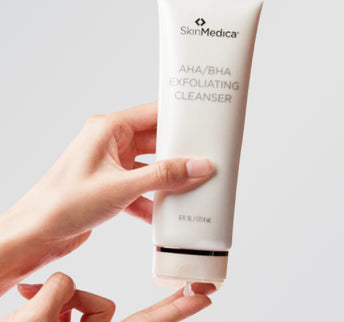
- An exfoliating acid running on the same nights — glycolic, lactic, salicylic. Remove it completely for the first month. This alone fixes most cases.
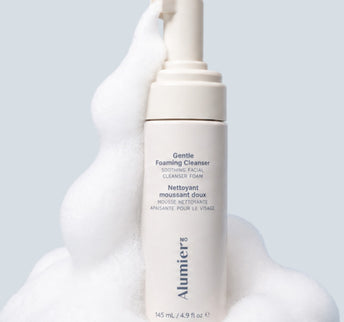
- A foaming or high-pH cleanser. If your skin squeaks after washing, that is a stripped barrier meeting a retinoid. Fix the cleanser first.
- A physical scrub. There is no version of this that pairs well with a retinoid, at any strength.
- Too much product. More retinol does not accelerate the result. It accelerates only the irritation.
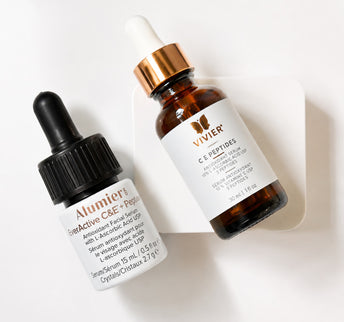
- A second active you forgot about — a vitamin C, a benzoyl peroxide, a prescription. Write your routine down. People routinely surprise themselves.
Buffering: The Technique Nobody Sells You
Apply moisturiser first, then the retinol on top, for the first four weeks. It slightly slows absorption, which slightly reduces the peak irritation, which dramatically increases the odds you are still doing this in three months. The cost in potency is small. The gain in adherence is enormous, and adherence is the only variable that has ever mattered here.
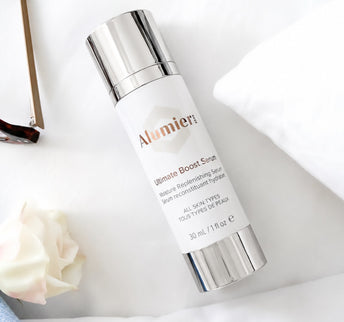
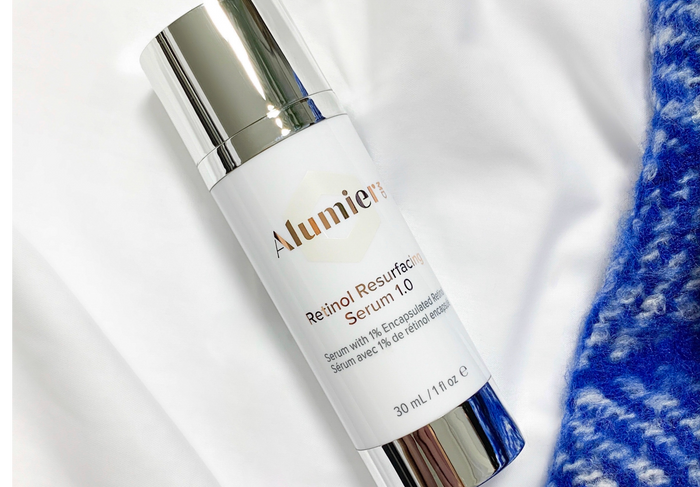
AlumierMD Retinol Resurfacing Serum 0.25% Is the Restart Strength
The encapsulation is the point, not the percentage. The retinol is released gradually rather than dumped on the skin at once, which is why 0.25% here behaves better than 0.25% elsewhere. For anyone who has quit a retinoid before, this is the highest-probability route back in — and if you outgrow it in three months, that is exactly what is supposed to happen.
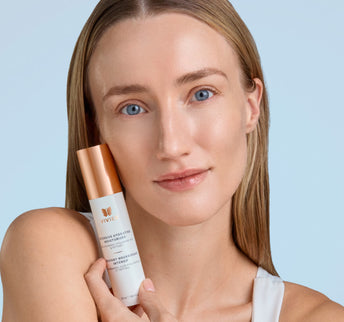
Already comfortable at 0.25%? Step to 0.5%, or bridge the gap with Vivier 0.3%.
The Retinol Ladder: Eight Worth Owning
Ranked by where you actually are rather than by strength. Buy the rung above where you are standing, not the one at the top.


0.25% vs 0.5% vs 1.0%: Which Rung Is Yours
The percentage is not a measure of ambition. It is a measure of what your barrier can tolerate while it adapts. Find your row honestly.
| 0.25% — Start Here | 0.5% — The Step Up | 1.0% — The Ceiling | |
|---|---|---|---|
| Price (AlumierMD) | $118.50 | $139.00 | $153.00 |
| Who it is for | First-timers and anyone restarting | 8+ comfortable weeks at 0.25% | Months of comfortable 0.5% use |
| Start at | 2 nights per week | 2–3 nights per week | 3 nights per week |
| Expect flaking? | Mild, weeks 2–4 | Likely, weeks 1–3 | Yes, plan around it |
| Buffering needed | First month only | First 6 weeks | Often ongoing |
| Visible change | 12–16 weeks | 10–14 weeks | 10–12 weeks |
| Risk of quitting | Low | Moderate | High if started too early |
The verdict: if you are reading a page about restarting retinol, your row is the first one. The 0.5% and 1.0% columns exist so you know where you are going, not where you are beginning. Skipping rungs is the single most reliable way to end up back in the drawer.
Four Restart Routines
Find the one that matches your history and run it exactly. Every product is linked.
Never used a retinoid
- 🌙 PM · wks 1–3: cleanse > moisturiser > Retinol 0.25%, two nights
- 🌙 PM · wks 4+: three nights, retinol before moisturiser once comfortable
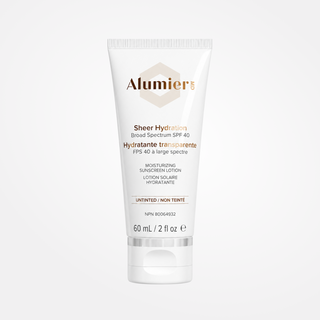
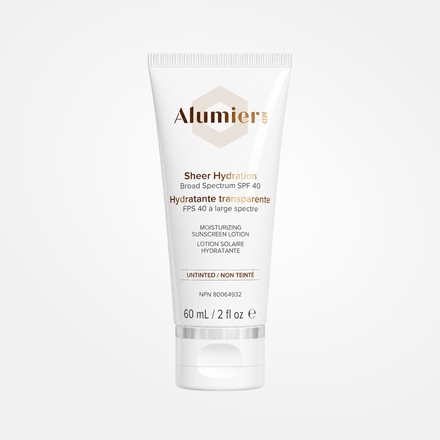
- ☀️ AM: cleanse > Sheer Hydration SPF 40, daily
Stopped once before
- ⛔ First: remove every acid and scrub for four weeks. Do not replace them.
- 🌙 PM: gentle cleanse > moisturiser > Retinol 0.25%, two nights, buffered for the full first month
- 📅 Week 5: reassess. Three nights only if there was no flaking.
Tolerant and ready to move
- 🌙 PM: cleanse > Retinol 0.5% > moisturiser, three nights
- 👀 Add: Retinol Eye Gel on the alternate nights
- ☀️ AM: SPF 40, non-negotiable at this strength
Retinol with redness-prone skin
- ⚠️ Only once calm — never start a retinoid during a flare.
- 🌙 PM: SensiCalm > HydraCalm > Retinol 0.25%, twice weekly maximum
- 📚 Read the autumn redness-prone skin protocol before you begin.
Five Mistakes That Send Retinol Back to the Drawer
1. Starting at 0.5% because 0.25% sounds weak
It is not weak. It is the strength that most people can actually keep using, and a retinoid you use for a year at 0.25% comprehensively beats one you use for five weeks at 0.5%.
2. Applying it to damp skin
Damp skin dramatically increases penetration. That is useful later and counterproductive now. Dry face, every time, for the first two months.
3. Ramping on a fixed calendar
The four-week plan is a default, not a deadline. If week three flakes, week four does not get an extra night. Your skin sets the pace and it is allowed to be slow.
4. Skipping sunscreen
Retinised skin is more photosensitive, and pigment gained in the morning undoes texture won at night. Daily SPF is not an optional companion product here, it is half the protocol.
5. Judging it at four weeks
At four weeks you are looking at adaptation, not results. Photograph your face in daylight without makeup today, and compare in January. A mirror you look at every morning cannot show you gradual change.
What Realistically Happens, Week by Week
Weeks one to three: possible mild dryness around the mouth and nose, occasionally a little flaking at the sides of the nose. Weeks four to eight: skin looks normal, perhaps slightly smoother, nothing you would photograph. Weeks twelve to sixteen: texture and tone move enough that the before-and-after starts to be obvious to you and, eventually, to other people. That is the real timeline. Anyone promising faster is selling something.
Frequently Asked Questions
How long before I see results from retinol?
Texture and tone changes are typically visible at twelve to sixteen weeks. The first four weeks are adaptation, not results. Photograph your skin in daylight now so you have an honest baseline.
Should I restart at a lower strength than the one I quit?
Yes. If you stopped a 0.5% retinol, restart at 0.25%. The point of a restart is to build tolerance without repeating whatever ended the first attempt.
What should I do if my skin flakes?
Hold your current frequency rather than increasing it, buffer with moisturiser underneath, and remove any exfoliating acid. Flaking that persists past four weeks usually means the frequency is too high, not that the product is wrong.
Can I use retinol every night?
Eventually, but there is rarely a need. Three to four nights a week delivers most of the benefit for most people and is far easier to sustain over years.
Is 0.25% retinol strong enough to do anything?
Yes. Encapsulated 0.25% used consistently for twelve to sixteen weeks produces measurable change in texture and tone. Consistency, not concentration, is the variable that decides outcomes.
Where can I buy authentic AlumierMD and Vivier retinol in Canada?
WeDoSkin is an authorized Canadian retailer for both. AlumierMD Retinol Resurfacing Serum is $118.50 at 0.25%, $139.00 at 0.5% and $153.00 at 1.0%; Vivier Retinol runs $110.00 to $148.00. All shipped fresh across Canada.
Keep Reading
Our #1 Recommendation
AlumierMD Retinol Resurfacing Serum 0.25%
The Intel: Encapsulated retinol released gradually rather than all at once — the formulation difference that decides whether a restart survives past week six. Authorized, fresh AlumierMD stock, shipped across Canada.
WHY SOURCE FROM WEDOSKIN?
Authorized RetailerFully authorized clinical partner for all 40+ brands. Fresh, active product guaranteed. | 45-Day GuaranteeProtected orders are covered by a 45-day window for total peace of mind on your investment. | Free ShippingBuild your clinical routine without shipping fees. Free delivery on Canadian orders over $65. |
Clinical DeliveryClimate-conscious logistics help preserve the integrity of active, temperature-sensitive formulas. | 5-Star ReputationThousands of patients trust our clinical team for their medical-grade shopping and guidance. | Expert GuidanceNot sure where to start? Get a routine mapped by our expert aesthetic team, free. |
Questions About Products?
Connect directly with a WeDoSkin clinical expert for a complimentary consultation. Tell us your skin type and what you are using now — we will map the exact routine and the order to use it in.
Contact Our Skincare ExpertsReviewed under medical oversight
This guide is reviewed by Dr. J. Porter, Medical Reviewer at the WeDoSkin Clinic in Calgary. As a Preferred Authorized Retailer, our clinical team works with these brands every day. Educational information, not a substitute for personalized medical advice. Our medical-review standards →
