



What Skincare Ingredients You Should Not Mix (2026 Layering Guide)
Here is the diagnosis nobody wants to hear after they've spent $600 building a routine: the problem usually isn't a single villain product. It's two or three excellent products, layered at the wrong time, in the wrong order, on a barrier that never got a vote. Medical-grade actives are potent by design — that's the entire point of paying for them — and potent things need choreography. Mix them carelessly and you don't double the results. You double the irritation and quietly dismantle the barrier that was holding everything together.
The internet has made this worse, not better, by turning ingredient pairing into a folklore of scary "never mix" lists — half of which are outdated myths, while the combinations that genuinely matter get buried. So this is the grown-up version: how mixing actually goes wrong, the handful of pairings worth separating, the myths you can retire, the correct order to layer everything, and how to add a new active without setting your face on fire. Bookmark it before your next routine change.
First, why mixing goes wrong at all
Every active you apply lands on the same thin, living surface: the skin barrier — a lattice of cells and lipids sitting under a slightly acidic film. That barrier is what keeps water in and irritants out, and almost every "my skin freaked out" story is really a barrier that got overwhelmed. Two things overwhelm it. The first is chemistry: some actives need a specific pH to work, and stacking them changes that pH so one or both stop performing. The second is cumulative load: each exfoliating or renewing active asks the skin to shed and rebuild faster, and there is a ceiling on how much of that skin can do before it starts leaking, stinging, and inflaming. Understand those two forces and the rules below stop being arbitrary and start being obvious.
The three rules that prevent 90% of disasters
Separate, Don't Stack
When two strong actives clash, you rarely have to choose forever — just use one in the AM and one in the PM, or on alternate nights.
One New Active at a Time
Introduce a single new product, give it two weeks, then add the next. It's the only way to know what's actually working — or irritating.
Barrier First, Always
No active outperforms a healthy barrier. If skin is stinging or flaking, you don't need more actives — you need a week of repair.
The quick-reference mixing chart
| Combination | Verdict | Why |
|---|---|---|
| Vitamin C + SPF | Best friends | Antioxidant under sunscreen is the strongest morning defence pair there is. |
| Vitamin C + Niacinamide | Fine together | The "cancels out" claim is an outdated myth for modern stable formulas. |
| Retinol + Hyaluronic Acid | Great pair | HA buffers and hydrates, easing the dryness retinol can cause. |
| Retinol + Peptides | Complementary | Different mechanisms, no conflict — a common anti-ageing duo. |
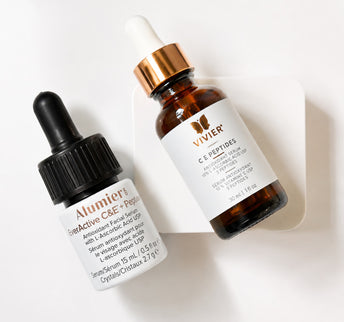
| Retinol + Vitamin C | Split AM / PM | Both work best at their own time; layered together they can irritate. |
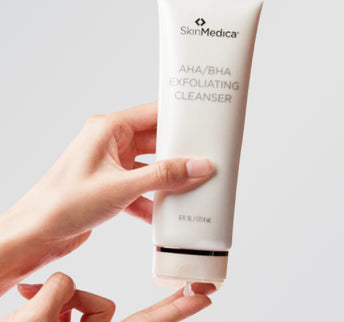
| AHA/BHA + Vitamin C | Use with care | Stacking acids on a low-pH vitamin C can tip skin into over-exfoliation. |
| Retinol + AHA/BHA acids | Don't layer | Double exfoliation strips the barrier — alternate nights instead. |
| Retinol + Benzoyl Peroxide | Keep apart | Can deactivate some retinoids and is doubly drying together. |
The science, explained (without the hand-waving)
1. The pH problem
Some actives are fussy about their environment. Pure vitamin C (L-ascorbic acid) only works at a low, acidic pH; exfoliating acids also need low pH. Niacinamide and most peptides prefer closer to neutral. When you layer things with clashing pH needs in the same minute, you can blunt one of them — not dangerously, just wastefully. The clean fix isn't to memorise a chemistry table; it's to give a fussy active its own moment. Vitamin C on bare morning skin. Acids or retinol at night. Everyone gets the environment they want.
2. The deactivation problem
A few pairings genuinely interfere. Classic benzoyl peroxide can oxidise certain forms of retinol when they sit together on the skin, leaving you with two irritating ingredients and half the benefit of one. This is why breakouts routines that use both should place them at different times — benzoyl peroxide in the morning, retinoid at night — rather than smearing them on together and hoping.
3. The over-exfoliation problem
This is the big one, and the cause of most damaged barriers we see. Retinol speeds cell turnover. AHAs (glycolic, lactic) and BHAs (salicylic) dissolve the glue between surface cells. Each is wonderful alone. Do them in the same sitting — or pile a scrub, an acid toner, a retinol and a weekly peel into one week — and you're shedding protective layers faster than skin can lay down new ones. The barrier springs a leak: stinging, tightness, flaking, redness, and often surprise breakouts. The improves the look of is almost comically simple: space them out.
The combinations to actually keep apart
Retinol + AHAs / BHAs
The move: Alternate nights, never the same night. A reliable rhythm is retinol on Monday/Wednesday/Friday and an acid on Tuesday/Thursday, with the weekend off to recover. Beginners should go gentler still. Build the exact cadence with our retinol strength guide and best exfoliants guide.
Retinol + Benzoyl Peroxide
The move: Different times or different days. If you're helps reduce the look of breakouts, benzoyl peroxide in the AM and your retinoid in the PM keeps both working and halves the dryness. Our salicylic acid guide covers gentler BHA alternatives if benzoyl peroxide is too harsh.
Too Many Strong Actives at Once
The move: Pick a lane per session. A good day looks like antioxidant + SPF in the morning and one treatment active at night — not four. The most common cause of a wrecked barrier isn't a villain ingredient; it's enthusiasm.
The myths you can stop believing
- "Niacinamide cancels out vitamin C." Retired. The myth comes from 1960s experiments on raw, heat-stressed ingredients — nothing like today's stabilised formulas, which deliberately pair the two. Layer away; only the most reactive skin needs to split them.
- "You can never use vitamin C and retinol." You can. Split them to morning and night and they become a complete anti-ageing pair — protect by day, renew by night — exactly as dermatologists prescribe them. See our best vitamin C serums guide.
- "Hyaluronic acid is an exfoliating acid, so it must clash." No. Despite the name, HA is a pure humectant — it holds water, it doesn't exfoliate. It layers safely under everything and actively softens the sting of stronger actives.
- "Natural means gentle, so I can layer as much as I want." Also false. Plenty of botanical acids and essential oils are potent sensitisers. "Natural" tells you nothing about how many actives your barrier can take at once.
The correct order to layer your skincare
Once you know what to separate, order is the other half of the equation. The universal rule is thinnest to thickest, water-based actives on clean skin first, richer creams and oils last, because a heavy cream applied first blocks the lighter actives behind it.
Morning — the goal is protection
- Gentle cleanser
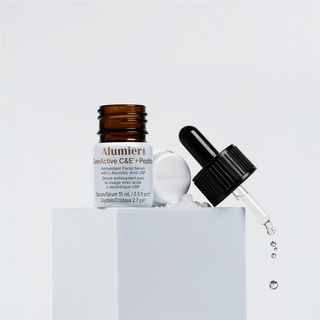
- Vitamin C / antioxidant serum on dry skin
- Hydrating or hyaluronic serum
- Moisturiser
- Broad-spectrum SPF — always the last step, and never skipped
Night — the goal is repair
- Cleanser (double cleanse if you wore SPF or makeup)
- One treatment active — retinol or an exfoliating acid, not both
- Hydrating serum to buffer
- Moisturiser or barrier cream to seal it all in
How to add a new active without wrecking your skin
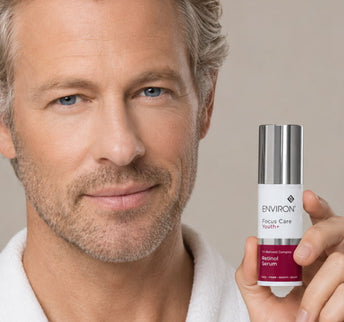
Most damage happens in the excited first week of a new purchase. Do it the patient way instead: introduce one new active at a time. Use it twice in the first week, three times the second, and only go nightly once your skin is comfortable — this is the same "step-up" logic that makes brands like Environ so well tolerated. Apply it to clean, dry skin, and if it stings, buffer by applying moisturiser first and the active on top ("the sandwich"). Give any single active a fair two-to-three weeks before you judge it or add the next. And the moment you see barrier warning signs — new stinging, tightness, flaking — stop everything, drop back to a gentle cleanser and a barrier cream for a week, and rebuild slowly. Skin that's given time rewards you; skin that's rushed makes you pay.
Ready to build a routine that layers cleanly? Explore our category rankings for vitamin C, niacinamide, and exfoliants, or browse the anti-aging and antioxidant collections at WeDoSkin.
Frequently asked questions
Can you use retinol and vitamin C together?
Yes, but the cleanest approach is to split them — vitamin C in the morning under SPF, retinol at night. Layering both at once isn't dangerous but tends to irritate without adding benefit.
What should you not mix with retinol?
Strong exfoliating acids (AHAs, BHAs) and benzoyl peroxide. Acids on alternate nights from retinol; keep benzoyl peroxide to a different time or day.
Does niacinamide cancel out vitamin C?
No — that's an outdated myth from 1960s lab conditions. Modern stable formulas combine them deliberately. Only very reactive skin needs to separate them.
What is the correct order to apply skincare?
Thinnest to thickest on clean skin: cleanser, watery treatment or vitamin C, hydrating serum, moisturiser, and SPF last in the morning. At night, use one treatment active, buffer, then seal.
How do I know if I've damaged my barrier?
New stinging, tightness, flaking, redness or breakouts on products that used to feel fine. Stop actives, simplify to a gentle cleanser and barrier cream for one to two weeks, then reintroduce one active at a time.
WHY CANADIANS CHOOSE WEDOSKIN
Authorized RetailerFully authorized clinical partner for all 40+ brands. Fresh, active product guaranteed.
|
45-Day GuaranteeProtected orders are covered by a 45-day window for total peace of mind on your investment.
|
Free ShippingBuild your clinical routine without shipping fees. Free delivery on Canadian orders over $65.
|
Clinical DeliveryClimate-conscious logistics help preserve the integrity of active, temperature-sensitive formulas.
|
5-Star ReputationThousands of patients trust our clinical team for their medical-grade shopping and guidance.
|
Expert GuidanceNot sure how to layer your actives? Get complimentary support from our expert aesthetic team.
|
Not sure what's fighting in your routine?
Send us your current line-up and our clinical team will map it into a clean AM/PM schedule — separating what clashes and sequencing what works — at no charge.
Talk to a WeDoSkin ExpertReviewed under medical oversight
This guide is reviewed by Dr. J. Porter, Medical Reviewer at the WeDoSkin Clinic in Calgary. As a Preferred Authorized Retailer, our clinical team works with these brands every day. Educational information, not a substitute for personalized medical advice. Our medical-review standards →
